Use your site evidence to develop an option, compare it with continued operation and identify the next checks. Available tools depend on your plan, country and inputs.
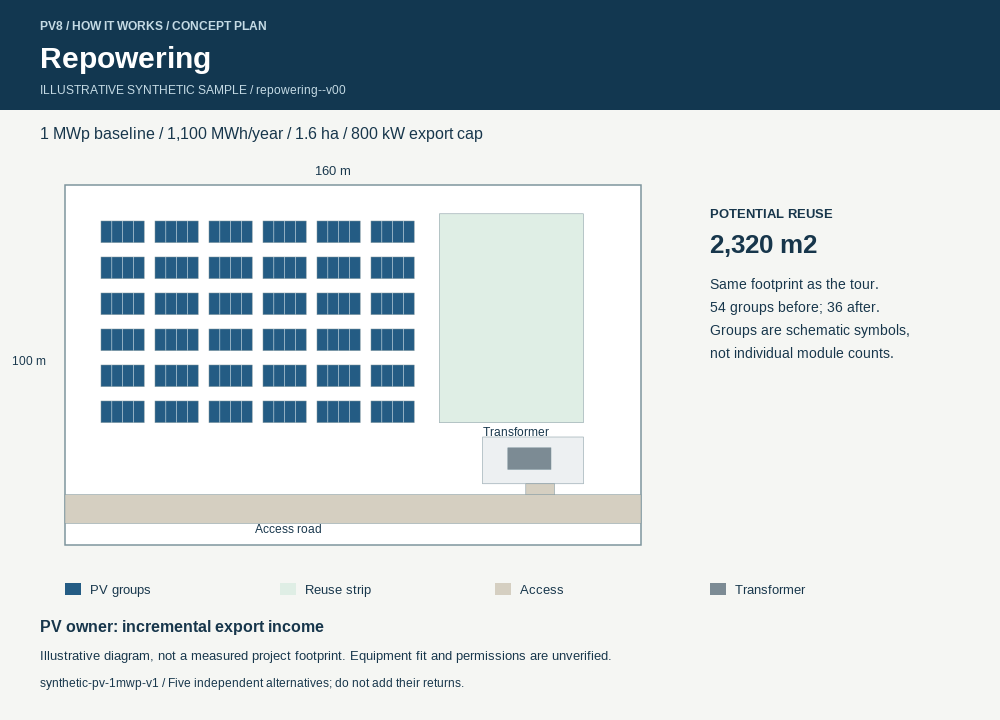
Compare keeping, repairing or repowering the plant. Assess replacement equipment, hourly yield, support expiry, costs and released land; test battery sizing and dispatch with the relevant grid and price inputs.
Review import and export limits, curtailment, capacity sharing and flexibility options. Keep indicative network capacity separate from the connection rights confirmed for your plant.
Identify potential off-takers, compare cable routes and match solar output to demand. Test supply economics and record the land rights, metering and buyer evidence still needed.
Assess IT capacity, layout, solar and grid supply, cooling, fibre connectivity and economics. Use the result to scope discussions with operators and connectivity providers.
Compare charger configurations using traffic, nearby competition, expected utilisation and energy costs. Check the site layout, grid supply and financial model before seeking operator terms.
Compare crop and greenhouse options, agricultural access and land economics. Assess irrigation demand, pumping and solar matching with the available water and operating evidence.
Screen wind resource, turbine layout, setbacks, energy yield and project economics. Confirm land, permitting and connection requirements before treating a layout as deliverable.
Compare sale, lease and leaseback scenarios, including land released by repowering. Review parcel evidence, access, planning and valuation assumptions separately from electricity income.
Save a decision version, export the supported report or model, and invite reviewers. Request missing evidence or counterparty terms, review replies and recalculate when inputs change. PV8 Watch keeps recorded deadlines and assigned actions attached to the decision.